What Are the Best Promotional Products for a Trade Show?
Trade show giveaways work best when they do more than fill a tote bag. The right promotional items help attendees remember your brand, start better booth conversations, and keep your name visible long after the event ends. A strong plan balances usefulness, portability, customization, and budget so every giveaway has a purpose.
Which promotional products for trade shows create lasting value?
The best promotional products for trade shows are useful, easy to carry, well-made, and clearly connected to your brand or audience. Attendees are more likely to keep items they can use during the event, at work, while traveling, or in their daily routine. That means the highest-value swag is rarely the cheapest item on the table; it is the item that earns repeated use.
Think about the environment first. Trade show attendees are walking, networking, collecting materials, checking phones, taking notes, and traveling back home. Promotional products that solve one of those small problems tend to feel more valuable than novelty items with no practical use.
Strong options include:
- Tote bags: Useful immediately for carrying brochures, samples, and event materials.
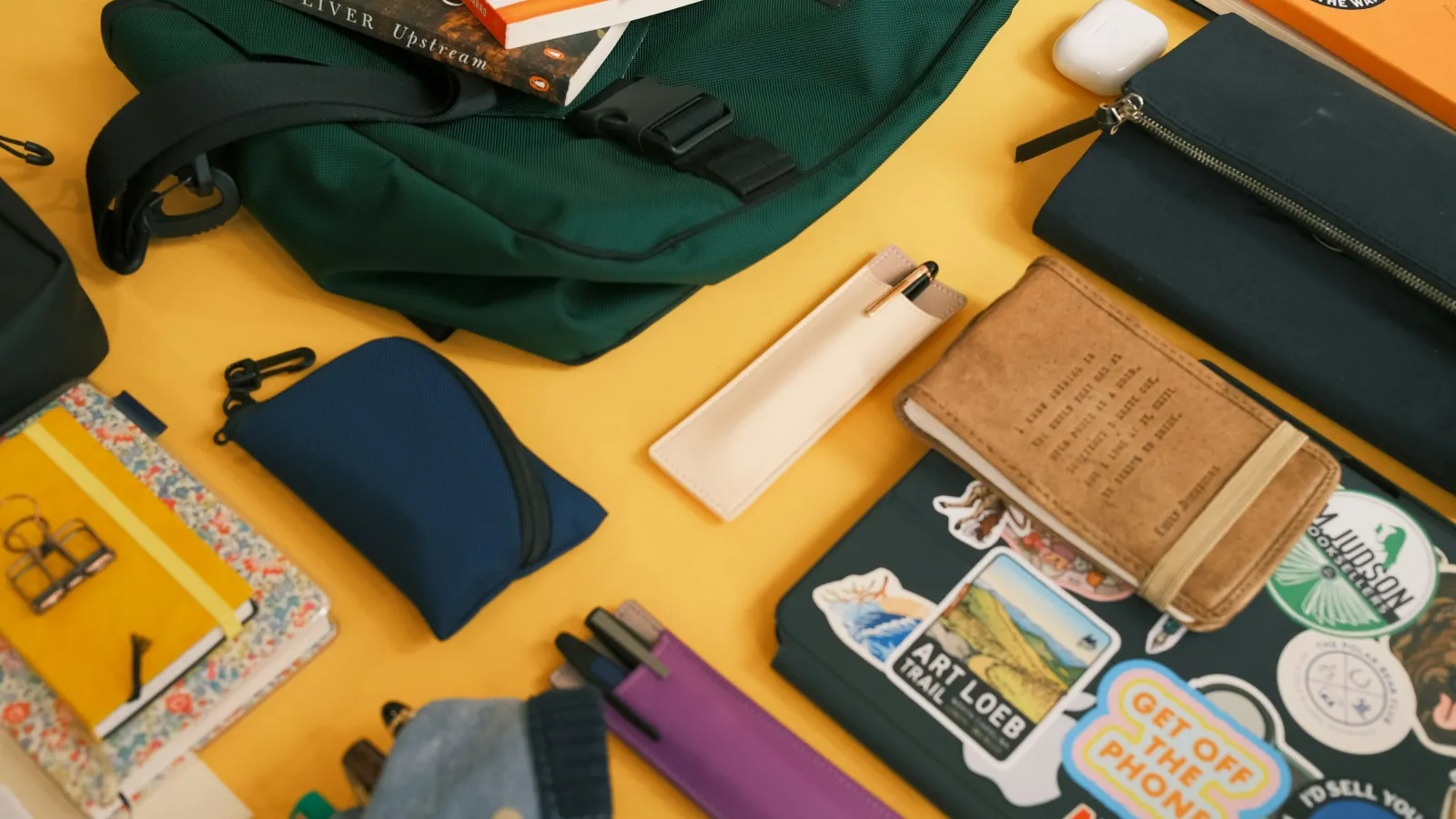
- Quality pens: Still practical, especially when paired with notebooks, order forms, or appointment cards.
- Notebooks or journals: Helpful for B2B events, training sessions, and conferences with educational tracks.
- Insulated tumblers or travel cups: A higher-perceived-value item that can stay in daily rotation.
- Power banks or charging accessories: Especially relevant for tech, travel, healthcare, and professional service audiences.
- Custom socks: Lightweight, memorable, wearable, and easy to brand with color, pattern, or subtle logo placement.
- Eco-friendly items: Recycled notebooks, reusable bags, bamboo utensils, or other sustainable products can support brands that want a more responsible presence.
The common thread is utility. If an attendee can picture using the item next week, it has a better chance of becoming a lasting brand impression.

A tiered giveaway strategy prevents wasted swag
A smart trade show plan does not treat every visitor the same. Some people stop for a free pen and keep moving. Others are serious prospects, current customers, partners, or decision-makers. Using the same item for everyone can drain your budget quickly or underserve the leads that matter most.
A simple structure is the 50/25/25 approach:
- 50% of the budget for mid-range items: These go to general booth visitors who engage with your team. Examples include notebooks, custom socks, tote bags, or practical desk items.
- 25% for premium gifts: Reserve these for qualified leads, scheduled meetings, demos, VIPs, or key accounts. Examples include insulated tumblers, power banks, premium apparel, or curated gift kits.
- 25% for high-volume budget giveaways: Use these for walk-up traffic, quick interactions, or brand visibility. Examples include stickers, pens, badge ribbons, microfiber cloths, or small event-friendly items.
This approach helps you stay generous without giving premium products to every casual passerby. It also gives your booth team a reason to qualify visitors. For example, a person who scans a badge and takes a brochure might receive a useful budget item, while someone who completes a product demo receives a higher-value gift.
The key is to make the rules clear before the event. Decide what action earns each giveaway level so staff members are consistent and confident.
Customization makes the difference between swag and brand experience
Custom promotional products should feel intentional, not like a logo was added at the last minute. The decoration method, colors, packaging, and message all affect how the item is perceived. A high-quality imprint can make a simple product feel polished, while poor decoration can make even a useful item look disposable.
Consider how each product is best customized. Embroidery can give hats, polos, bags, and socks a more premium feel. Jacquard designs can weave branding directly into items such as socks or textiles. Full-color sublimation works well when you want bold artwork, gradients, event themes, or more creative visual impact.
Branding does not always need to be oversized. In many cases, attendees are more likely to use a product with tasteful branding than one dominated by a large logo. A subtle mark, clever phrase, event-specific design, or brand-color pattern can create a stronger emotional connection while still keeping your company visible.
How should you choose products for your audience?
Choose promotional items by matching the product to the attendee's real context, your industry, and the kind of action you want after the show. A giveaway for software buyers should not necessarily look the same as one for outdoor retailers, healthcare professionals, or construction buyers. The more relevant the item feels, the less likely it is to be discarded.
For a tech-focused event, charging cables, webcam covers, power banks, laptop sleeves, or compact desk accessories may make sense. For an outdoor, fitness, or lifestyle audience, consider water bottles, cooling towels, caps, socks, or reusable pouches. For professional services, notebooks, quality pens, document organizers, and drinkware often fit the setting.
Budget also matters. A startup with limited funds might skip expensive electronics and choose one standout mid-tier item with excellent design. A large exhibitor may need thousands of simple handouts plus a smaller batch of premium gifts for sales-qualified leads. A sustainability-conscious brand might focus on recycled, reusable, or low-waste alternatives rather than single-use plastic items.
Use this quick decision checklist before ordering:
- Will attendees actually use it? If the answer is unclear, choose something more practical.
- Is it easy to pack and carry? Bulky items can become a burden on the show floor.
- Does it fit your brand personality? A playful brand can be more creative; a conservative brand may need a cleaner, more professional item.
- Can it be customized well? Decoration quality affects perceived value.
- Does it support your event goal? Booth traffic, lead capture, demos, meetings, and customer appreciation may require different items.

Order planning keeps your giveaway strategy on track
Even the best product idea can fall apart if it is ordered too late or in the wrong quantity. Start by estimating booth traffic, then separate expected visitors into casual walk-ups, engaged conversations, qualified leads, and VIP meetings. This prevents over-ordering premium items or running out of entry-level giveaways halfway through the show.
A practical plan includes a buffer, especially for large shows or events where traffic is hard to predict. If your booth has scheduled demos, speaking sessions, or sponsorship visibility, expect more spikes in traffic. If your team is focused on fewer high-quality conversations, you may need fewer total products but better mid-tier and premium options.
Timing is just as important as quantity. Order early enough to allow for product sourcing, artwork proofing, customization, production, and shipping. A general planning window of three to four weeks is a sensible starting point, though complex custom promotional products may need more time. Rushing often limits your choices and can increase stress around approvals and delivery.
Before the show, organize products by tier and brief your staff on when to offer each item. Keep premium gifts out of open grab areas so they can be used strategically. If possible, track which giveaways are tied to demos, meetings, or lead scans so you can make better decisions for the next event.
Common mistakes that make trade show giveaways less effective
Many giveaway problems come from choosing products based only on unit cost. Cheap-looking items may seem efficient, but they can weaken the impression you worked hard to create. If the product breaks, feels flimsy, or has unclear branding, it reflects poorly on the brand behind it.
Avoid these common mistakes:
- Buying only the cheapest item available: Low cost does not equal high value if attendees throw it away.
- Ignoring portability: Heavy, awkward, or fragile items are harder for attendees to keep.
- Using generic branding: A plain logo with no event relevance can feel forgettable.
- Over-ordering premium gifts: Save higher-value products for qualified leads and important relationships.
- Choosing single-use plastic by default: Reusable or recycled options can feel more thoughtful and current.
- Waiting too long to order: Late decisions reduce customization options and create avoidable risk.
A better approach is to ask what each product is supposed to do. Some items attract traffic. Others reward engagement. Others keep your brand on a prospect's desk, in their bag, or in their routine. When every item has a role, your trade show investment becomes easier to justify.
The best giveaway is the one with a job to do
The best promotional items are not just popular; they are purposeful. They fit the audience, support the booth strategy, look polished, and give attendees a reason to keep using them. Whether you choose custom socks, notebooks, drinkware, bags, tech accessories, or eco-friendly products, the goal is the same: create a useful reminder of a meaningful interaction.
Before your next event, build your giveaway plan around attendee behavior and lead quality. Use budget items for volume, mid-range products for real engagement, and premium gifts for the prospects and relationships that matter most. That structure turns promotional products for trade shows from a last-minute purchase into a smarter part of your event marketing strategy.
Are you interested in promoting your business at a trade show or event? Safeguard can help! Reach out to us at 800-763-5454 or submit our quote request and one of our dedicated representatives would be happy to help you curate the perfect setup for your event or show.